If you had to name one of the biggest cost-savings opportunities that is often underestimated on the farm, it’s got to be logistics strategy and management. In a tight farm economy, logistics stop being about organization and start becoming about survival.
“Logistics is all about having the right material and equipment in the right place at the right time at the right price. Questioning your assumptions and planning ahead are keys to managing costs in 2026,” says Randy Siever, Chief Operating Officer at Total Acre.
When margins shrink and input costs stay stubbornly high, the growers who win aren’t necessarily the ones who cut the most, they’re the ones who plan the best. In 2026, logistics is one of the most overlooked opportunities to improve profit on the farm. Plain and simple, good logistics is profit insurance.
It’s fewer trips to the same field.
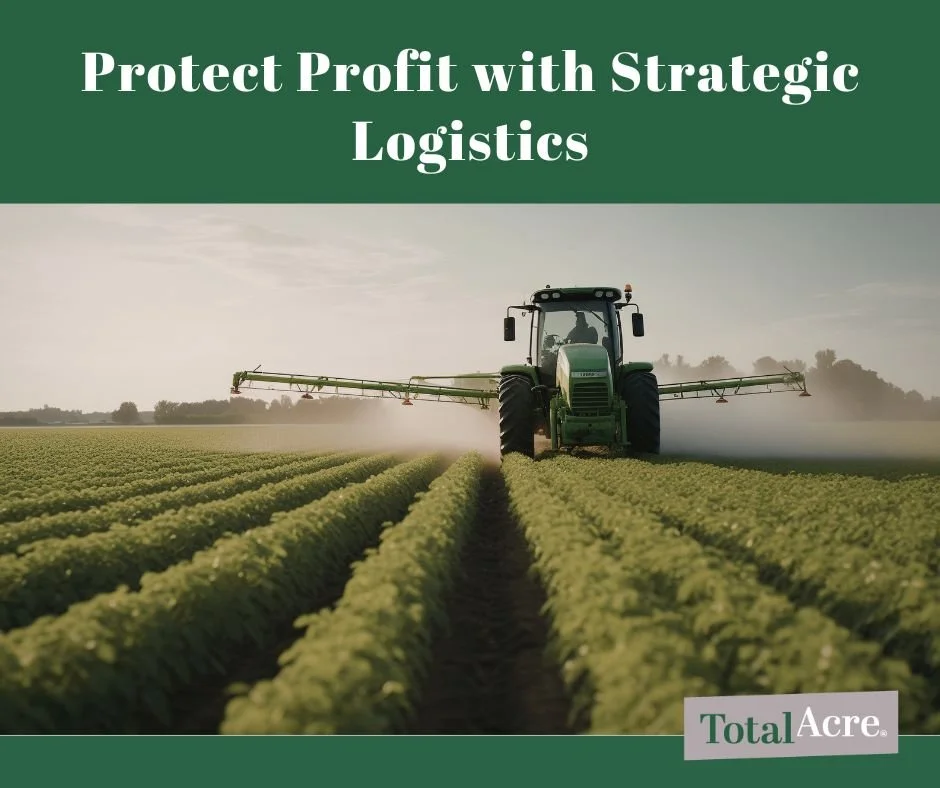
It’s fewer passes in the sprayer.
It’s fewer emergency trips to town.
It’s fewer rushed decisions under pressure.
It’s fewer acres compromised by timing mistakes.
And in tight years, those small efficiencies add up quickly.
Secure Inputs — But Do It Strategically
Planning ahead matters. But planning ahead with an emotional mindset can be just as costly as waiting too long. Every input decision heading into 2026 should be grounded in your farm’s data, not fear, habit, or sales pressure. Overbuying ties up capital and leads to waste. Under-planning often forces last-minute purchases at premium prices.
During a recent grower panel in Nebraska, Total Acre member Brian Herbek explained why he first explored RDX-N, a product that cuts the use rate of synthetic nitrogen: “The logistics savings alone made it worth exploring. Then the agronomy proved it out.”
That mindset captures this season perfectly. If a product simplifies handling, reduces passes, saves time, or lowers risk, that’s worth evaluating. Logistics savings are real savings.
Equipment Readiness: Fix It Before It Costs You
There’s nothing more expensive than downtime during a critical window.
Fixing a planter in the shop in January is far cheaper, and far less stressful, than fixing it during a three-day planting stretch in April. Cleaned sensors. Calibrated meters. Updated firmware. Uploaded yield maps to YMS. These details may feel small, but they protect thousands of dollars in potential yield.
In a year where commodity prices may not drive the ROI you are looking for, execution matters more than ever.
Timing Is a Strategy — Not a Guess
Planning the season strategy by your past habits doesn't always pay. Historical GDU trends and soil temperature data should guide your 2026 plan but not be the only data you use. Field order should be intentional. Custom applicators should be scheduled well ahead of time. And every plan needs built-in flexibility.
Spring weather has never followed a spreadsheet. The growers who stay calm and adaptable, while staying on a plan, protect both yield and maybe more importantly, their sanity.
When Logistics Are Dialed In, Everything Gets Easier
When your logistics are tight:
You eliminate emergency runs.
You reduce mistakes.
You minimize compaction.
You save fuel and labor.
You protect yield timing.
That’s not just operational discipline. That's an economic advantage.
In 2026, doing what pays might not mean doing more. It may simply mean doing things cleaner, earlier, and more intentionally.
Strategic Logistics Questions for 2026
As you plan for this season, ask yourself:
Does this pass increase or protect yield?
Does this step reduce risk?
Can this be done more efficiently?
Is this habit… or is it profitable?
If commodity prices stay flat, does this still make sense?
Tough years reward disciplined operators. And disciplined logistics might be one of the most profitable decisions you make all season.
Ready to Dial in Your Numbers?
Logistics decisions are only as good as the data behind them. Using YMS allows growers to evaluate input timing, track true cost per bushel, analyze multi-year performance by field, and identify where operational changes actually improved ROI. Instead of guessing which passes paid, you can measure it.
David Hula has said in many Total Acre meetings, “if you don’t measure it, you can’t manage it.” This year especially, measuring and managing logistics on your farm may provide valuable insights that you need to drive your targeted ROI.
If 2026 is about only doing what pays, then it starts with knowing your numbers. YMS helps you make logistics decisions with clarity, confidence, and a clear path toward profitability.